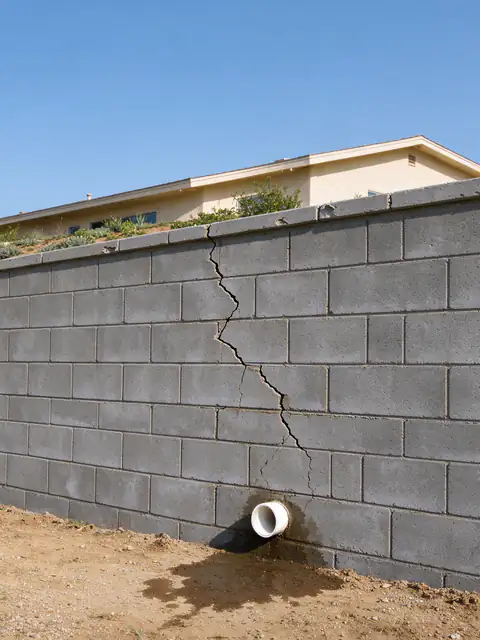
Why no one but your insurer can answer the coverage question, the questions to put to them, how to document a wall before and after a storm, and why public disaster money rarely reaches private slopes.
Last Updated:
Short answerIt depends on your policy and on why the wall failed, and policies differ. Only your insurer, reading your policy against the cause of the damage, can say. What you can do is ask the right questions, document the wall well, and know that FEMA slope money goes to public agencies, not to private walls.
Does homeowners insurance cover a retaining wall? The only reliable answer comes from your insurer, because it turns on two things nobody else can see together: your policy’s exact wording and the cause of the failure. This guide doesn’t tell you what your policy covers. Batterline San Diego Retaining Walls offers and manages retaining wall repair and rebuilds across San Diego County, and it sets out here the questions to ask, the records that help, and what public money does and doesn’t do for walls on private land.
Why there is no single answer
Homeowners policies differ in how they treat structures other than the house, in what causes of loss they include or exclude, and in how they word water, ground and maintenance. A retaining wall can fail for several reasons at once: a storm saturates the backfill, a drain that had silted up can’t carry the water, clay swells, an old timber wall’s tiebacks have rotted, or a driveway added years ago has been overloading it. An insurer reads the policy against the cause it finds, which is why two neighbors with walls that fell in the same storm can get different answers.
Advice passed between neighbors after a storm about what “insurance never covers” is no substitute for your own policy. Read the declarations page and the exclusions, then ask.
What to ask your insurer
Ask in writing, and keep the reply:
Is a retaining wall covered under my policy, and under which part of it?
Does coverage depend on the cause of the failure, and how will the cause be determined?
How does my policy treat water, drainage and ground or earth movement?
Is removing the fallen wall and soil covered separately from rebuilding it?
If the wall damaged my house, a fence or a neighbor’s property, how is that handled?
How soon must I report the damage, and what documentation do you need?
Will you send an adjuster or an engineer, or do you need a report from one I hire?
If the wall that failed is a neighbor’s, or sits on the line between lots, who owns it shapes who files the claim. The guide to who is responsible for a retaining wall covers how that is worked out.
Documenting the wall, before and after
The cause is easier to establish when there is a record. Before the rainy season, photograph the whole wall from a fixed spot, mark the ends of any cracks with a dated pencil line, and note whether the drain outlets run after watering. San Diego’s storms come in a short season: about 83% of Lindbergh Field’s average rainfall falls from November through March (NOAA climate normals), and on January 22, 2024 the station recorded 2.73 inches in a day, its highest daily total in a record going back to 1939. Knowing the date and size of the storm that preceded a failure helps everyone reading the claim.
After a failure, repeat the photos from the same spot, measure the lean and the crack widths, photograph the outlets, the ground above the wall and anything the wall damaged, and keep receipts for any maintenance done on its drains. Old permits and plans show how the wall was designed, which bears on the cause. The guide to checking a wall after heavy rain covers what to look at from a safe distance.
Making the site safe while the claim is open
Keep people, pets and cars off the ground above a failed wall and away from its toe, since a wall that has moved once can move again in the next storm. Redirect downspouts and turn off irrigation that drains toward it. Don’t dig behind or under a moving wall to clear it; excavations 5 feet or deeper that workers enter need a Cal/OSHA permit (8 CCR 341) for good reason. If soil or a wall has moved onto a neighbor’s lot or the street, tell the neighbor or the City, and your insurer, promptly.
Who finds the cause
Coverage decisions are the insurer’s. Cause findings come from people who can look inside the wall and the ground. A site visit can measure the wall, its height from the footing where that can be found, the lean, the cracks, the drainage and the load above it, and say which parts failed. When the ground itself moved, or the wall sits on a mapped landslide or slide-prone formation, a geotechnical engineer’s investigation may be needed, and the City can require one before the wall is rebuilt. The guide on when a wall needs an engineer explains those triggers.
Public money for slopes and walls
Public disaster money rarely reaches private walls. Research for this site found FEMA Hazard Mitigation Grant Program money for slope stabilization flowing through Cal OES to local governments and public agencies, with examples that were public-entity projects. FEMA Public Assistance appeal decisions found retaining-wall work on private-property slopes ineligible. No utility, state or federal rebate or tax credit for residential retaining walls turned up, and turf replacement rebates exclude structures and impermeable surfaces.
Cities have declined to step in, too. In one reported Serra Mesa case, the City said upper canyon slopes are typically private property and would not evaluate a home with no City utilities beneath it. If your wall sits on a canyon slope, the guide to walls on canyon lots covers what that means for a rebuild.
Rebuilding after the storm
A storm doesn’t change the permit rules. A replacement wall over 3 feet from the top of its footing, or one holding a surcharge, is permitted work in the City of San Diego, and walls outside the City’s standard drawings are designed by a licensed engineer or architect; the permit guide covers each trigger. What the rebuild involves depends on what failed, explained in the guide to repair or replacement, and the cost guide has the typical ranges an insurer or you will be weighing. When the slope itself failed, slope repair comes into it as well.
To have a damaged wall measured and written up, call (619) 374-2499 or ask for an estimate with the address, the date of the storm and your before-and-after photos.
02
More questions on this
Will FEMA pay to rebuild a retaining wall on my property?
Research for this site found no FEMA or Cal OES program that pays homeowners to rebuild retaining walls. The slope-stabilization projects found were public-entity work, and FEMA Public Assistance appeal decisions found retaining-wall work on private-property slopes ineligible. If your area is under a declared disaster, ask FEMA directly what, if anything, applies to your property.
What should I photograph before filing a retaining wall claim?
The whole wall from a fixed spot, close views of every crack, bulge and displaced block with a tape measure in frame, the drain outlets and whether they are running, the ground and anything sitting above the wall, and any damage to the house, fences or a neighbor's property. Photos taken before a storm, even casual ones, help show what changed.
Does a retaining wall rebuilt after storm damage still need a permit?
Yes, if the wall meets the usual triggers. In the City of San Diego a wall over 3 feet from the top of its footing, or any wall holding a surcharge or backfill steeper than 1.5:1, needs a building permit, whatever caused the old one to fail. Unincorporated County lots follow a similar rule, and the permit path should be settled before the rebuild is priced.
03
Get an Estimate for retaining wall repair
Tell us what the wall is doing, how tall it is from the lowest visible point, what sits above it and your ZIP code. Photos of the face, the top and any drain outlets make the first conversation more useful.
The signs worth looking for once a storm passes, how to look without putting anyone at risk, and why short bursts of San Diego rain are hard on walls built for a dry climate.
How ownership, recorded agreements, HOA documents and City rules point to who maintains a wall, what the City expects of owners, and where to look before a dispute starts.
The pressures that push a wall over, the three ways walls move, why San Diego's rain pattern and clay matter, and how to record the lean before anyone visits.
The fire, hillside, open space and geology rules that apply where a San Diego yard meets a canyon, and who is responsible for the slope below the fence.