Retaining Wall Service Areas in San Diego County
Eighteen areas with their own page, four more covered below, and the permit office, housing age and soil that change a wall in each one.
Batterline San Diego Retaining Walls repairs, replaces and builds retaining walls across San Diego County, from the coastal bluffs of La Jolla and Encinitas to the hillside lots of Poway, Alpine and Escondido. The service areas below are the places where something local changes the work: which office issues the permit, how much of the ground is expansive clay or steep slope, and how old the housing around the walls is.
The permit office is the first difference. Inside the City of San Diego, walls go through the Development Services Department and the City’s fee schedule. In unincorporated communities such as Alpine, Rancho Santa Fe and Fallbrook, the County of San Diego’s Planning and Development Services takes over. Cities such as Encinitas, Poway, Santee, Escondido, Chula Vista and El Cajon each run their own building division with their own thresholds, which are confirmed for the address. Soil and slope come next, because a wall on swelling clay or a steep cut needs drainage and often engineering that a short wall on level ground doesn’t; the guide to expansive clay and the canyon lot guide explain why.
Prices don’t change by neighborhood. The same typical San Diego-area ranges apply everywhere, and the cost calculator adds the City or County permit fee once you pick where the property is.
18 areas with their own page
7 main areas, then 11 more where a local permit office, soil or slope changes the work.
-
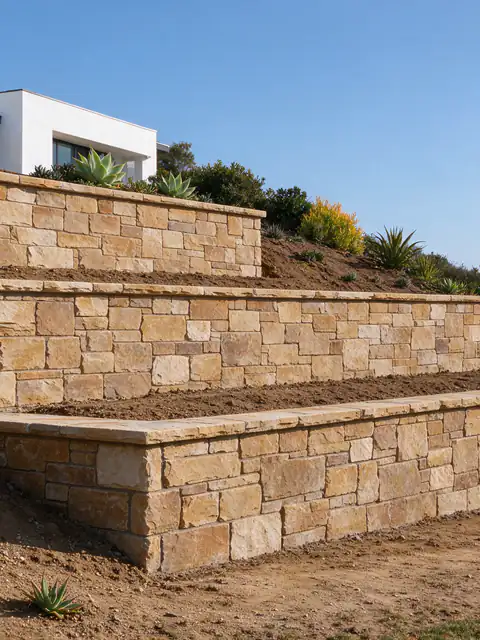
La Jolla
City of San Diego
-
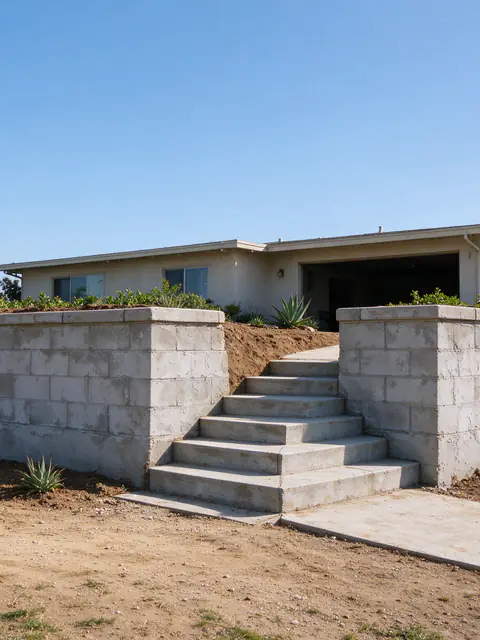
Point Loma
City of San Diego
-
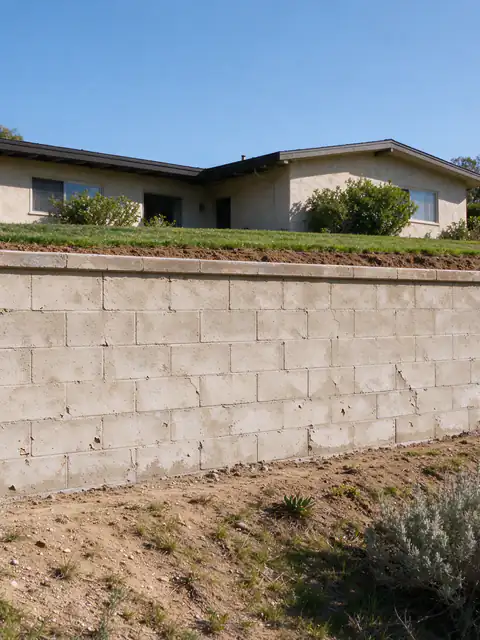
Clairemont
City of San Diego
-
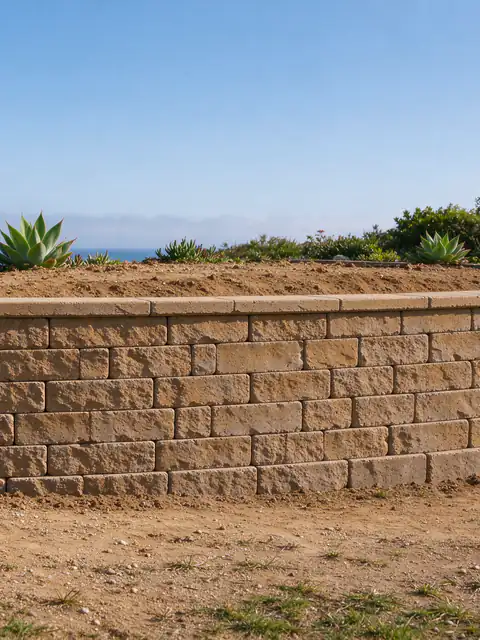
Encinitas
City of Encinitas
-
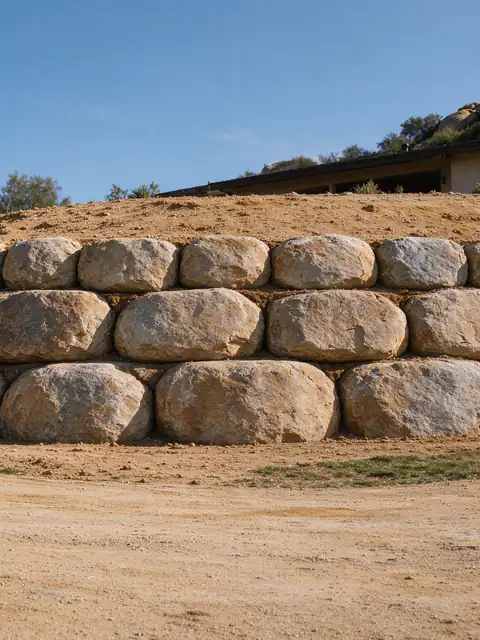
Poway
City of Poway
-
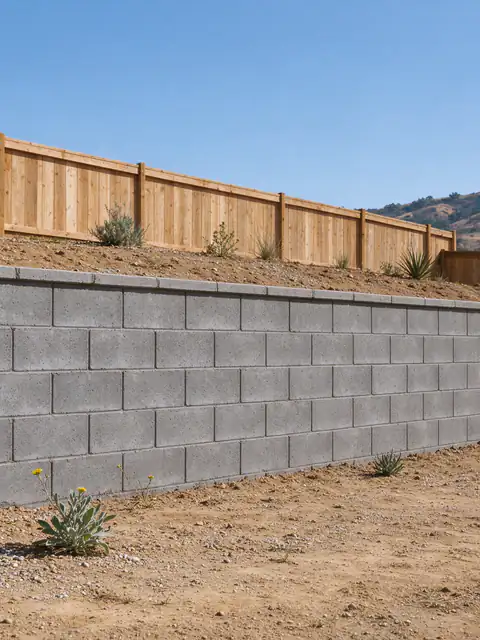
Santee
City of Santee
-
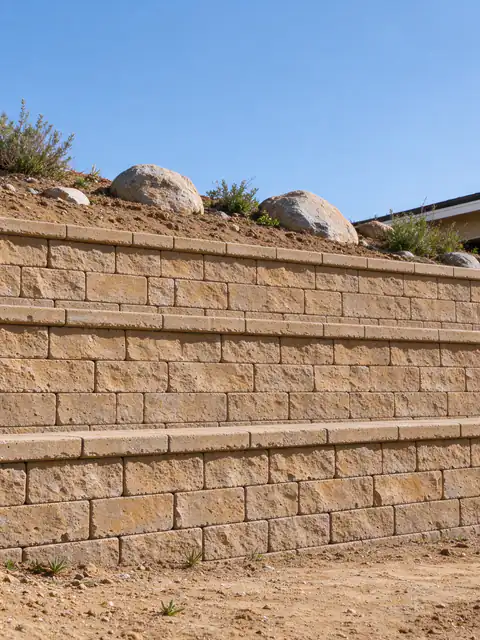
Escondido
City of Escondido
Mission Hills
City of San Diego
San Carlos and Del Cerro
City of San Diego
Rancho Penasquitos
City of San Diego
Tierrasanta
City of San Diego
Rancho Bernardo
City of San Diego
Solana Beach
City of Solana Beach
San Marcos
City of San Marcos
Chula Vista
City of Chula Vista
El Cajon
City of El Cajon
Rancho Santa Fe
County of San Diego (unincorporated)
Alpine
County of San Diego (unincorporated)
Where the service areas sit
| Area | Permit office | Homes before 1980 | Shrink-swell soil points | Points on 15%+ slopes |
|---|---|---|---|---|
| La Jolla | City of San Diego | 68.5% | 38.3% | 50.0% |
| Point Loma | City of San Diego | 73.9% | 3.4% | 18.6% |
| Clairemont | City of San Diego | 82.5% | 16.7% | 30.0% |
| Encinitas | City of Encinitas | 50.1% | 25.0% | 40.0% |
| Poway | City of Poway | 55.6% | 41.7% | 71.7% |
| Santee | City of Santee | 53.5% | 58.3% | 43.3% |
| Escondido | City of Escondido | 46.9% | 46.7% | 28.3% |
| Mission Hills | City of San Diego | 62.2% | 0.0% | 38.3% |
| San Carlos and Del Cerro | City of San Diego | 76.0% | 51.7% | 43.3% |
| Rancho Penasquitos | City of San Diego | 36.5% | 90.0% | 73.3% |
| Tierrasanta | City of San Diego | 50.2% | 68.3% | 65.0% |
| Rancho Bernardo | City of San Diego | 40.3% | 81.7% | 48.3% |
| Solana Beach | City of Solana Beach | 68.8% | 3.3% | 36.7% |
| San Marcos | City of San Marcos | 27.3% | 33.3% | 51.7% |
| Chula Vista | City of Chula Vista | 42.4% | 86.7% | 30.0% |
| El Cajon | City of El Cajon | 67.5% | 88.3% | 20.0% |
| Rancho Santa Fe | County of San Diego (unincorporated) | 55.1% | 76.7% | 31.7% |
| Alpine | County of San Diego (unincorporated) | 38.1% | 60.0% | 85.0% |
Homes: U.S. Census Bureau American Community Survey 5-year estimates; City of San Diego neighborhoods use their community planning area. Soil and slope: share of sampled USDA NRCS soil survey points with moderate or higher shrink-swell, and with a mapped typical slope of 15% or more. They describe an area, not a specific lot.
Retaining walls in Carmel Valley
- Permit office
- City of San Diego Development Services Department
- Homes before 1980
- 6.6% (Census ACS)
- Shrink-swell soil points
- 26.7% (USDA NRCS)
- Inside the Coastal Zone
- About 22% of the area (SANDAG/SanGIS)
Carmel Valley is a City of San Diego community, so its walls go through the City's Development Services Department under the same rules as the rest of the city: a permit once a wall is over 3 feet from the top of the footing, or at any height when it holds a driveway, a structure or a steep slope. What sets it apart is age. About 42.5% of its homes were built in 2000 or later and only 6.6% before 1980 (Census ACS), so a wall here may be recent enough that its permit and plans can still be looked up, which tells a repair a great deal about how it was built.
The ground is the reason to check. In a City geologic hazard map sample, about 8.8% of Carmel Valley falls in slide-prone formations, and terrace escarpments are among the most common soil map units in the USDA soil survey. Where a wall over 6 feet, or one holding a surcharge, sits in one of those formations, the City requires a geotechnical report before the permit (SDMC 145.1803), which changes both the schedule and the budget. About 22% of the planning area is also inside the Coastal Zone, where wall work can need a Coastal Development Permit or an exemption.
For a wall that has started to lean on a slope, the questions are the same as anywhere in the city, with the hazard map checked first. Retaining wall repair covers how the cause is found, and the hillside retaining wall page covers taller walls on slopes. The nearest area pages are Rancho Penasquitos and Solana Beach.
Retaining walls in Carlsbad
- Permit office
- City of Carlsbad Community Development, Building Division
- Homes before 1980
- 29.8% (Census ACS)
- Shrink-swell soil points
- 36.7% (USDA NRCS)
- Inside the Coastal Zone
- About 41% of the area (SANDAG/SanGIS)
Carlsbad is its own city, and its Community Development department's Building Division issues wall permits there, not the City of San Diego or the County. Its height threshold, plan requirements and fees are its own and are confirmed for the address before a design is drawn. About 41% of the city lies inside the Coastal Zone, where a Coastal Development Permit can apply to wall work.
Soil is the other variable. Altamont clay is one of the most common map units in the USDA soil survey for Carlsbad, and about a third of the sampled soil points show high shrink-swell. Where a lot sits on that clay, the soil swells when it is wet and shrinks when it dries, pushing on the wall each season; the guide to expansive clay explains how drainage and the backfill are chosen around it. About 19% of the city also sits on mapped slopes over 25%, where a wall is more likely to need an engineered design.
Housing is mixed: the median home dates to about 1989, and roughly 30% were built before 1980 (Census ACS). Where an older wall's drainage has failed, the first decision is between repair and replacement, because a lasting fix has to reach the gravel and pipe behind the face. The nearest area pages are Encinitas and San Marcos.
Retaining walls in Oceanside
- Permit office
- City of Oceanside Development Services, Building Division
- Homes before 1980
- 37.9% (Census ACS)
- Shrink-swell soil points
- 58.3% (USDA NRCS)
- Inside the Coastal Zone
- About 6% of the area (SANDAG/SanGIS)
Oceanside is a separate city whose Development Services department, through its Building Division, issues wall permits. When a wall needs a permit there, and what the plans must show, is confirmed with that office for the address; the City of San Diego's thresholds don't carry over. Only about 6% of the city falls inside the Coastal Zone, so for most of the city the Coastal Zone isn't a factor.
The soil survey matters more here than the coast does. More than half of the sampled soil points in Oceanside show moderate or higher shrink-swell and about half show high, with Salinas clay loam among the common units, alongside eroded Las Flores loamy fine sand and Tujunga sand. Clay that swells pushes on a wall; eroded sandy soil washes out from under one when water has nowhere to go. Either way, retaining wall drainage is part of the design, not an extra.
About 15% of the city sits on mapped slopes over 25%, and roughly 38% of homes were built before 1980 (Census ACS). A new wall on a sloped lot starts with the questions on new retaining walls; the cost calculator gives a budget, with Oceanside's own permit fee confirmed separately. The nearest area pages are San Marcos and Escondido.
Retaining walls in Fallbrook
- Permit office
- County of San Diego Planning & Development Services
- Homes before 1980
- 48.9% (Census ACS)
- Shrink-swell soil points
- 73.3% (USDA NRCS)
Fallbrook is unincorporated, so wall permits go through the County of San Diego's Planning and Development Services, not a city hall. The County's wall handout says every retaining wall higher than 3 feet needs a building permit, and its building rules also bring in walls under 3 feet that hold a surcharge such as a driveway. Its zoning limits solid walls and fences to 42 inches in front and exterior side setbacks and 72 inches in rear and side setbacks, which matters when a wall and a fence are planned together. County permit fees run about $1,020 for an over-the-counter review and about $2,700 when plans go through full plan check.
Fallbrook sandy loam is the most common map unit in the USDA soil survey here, on slopes of 5 to 30%, several of them mapped as eroded. About 73% of sampled points show moderate shrink-swell, but only 20% show high, so high-swell clay is the exception here rather than the rule. Erosion and water are the bigger issue on sloped lots: about 21% of the community sits on mapped slopes over 25%, and a quarter of the sampled points show bedrock within about a meter, which can change how a footing is dug.
Close to half of Fallbrook's homes were built before 1980, and about 12% before 1960 (Census ACS), and an older wall on a hillside lot that has started to slump raises two questions at once: the wall, and the slope it holds, which is where slope repair and replacement meet. The permit guide covers the County process in full. The nearest area pages are Escondido and San Marcos.
More communities, covered on their nearest area page
These communities don't have a page of their own. Each one has a section on the nearest area page, with its permit office and the local soil and housing facts that change a wall there.
| Community | Permit office | Covered on |
|---|---|---|
| Bonita | County of San Diego (unincorporated) | Chula Vista |
| Del Mar | City of Del Mar | Solana Beach |
| Kensington-Talmadge | City of San Diego | Mission Hills |
| La Mesa | City of La Mesa | El Cajon |
| Lakeside | County of San Diego (unincorporated) | Santee |
| Lemon Grove | City of Lemon Grove | El Cajon |
| Mira Mesa | City of San Diego | Rancho Penasquitos |
| Mount Helix | County of San Diego (unincorporated) | El Cajon |
| National City | City of National City | Chula Vista |
| Ramona | County of San Diego (unincorporated) | Alpine |
| Scripps Miramar Ranch | City of San Diego | Rancho Penasquitos |
| Spring Valley | County of San Diego (unincorporated) | El Cajon |
| Valley Center | County of San Diego (unincorporated) | Escondido |
| Vista | City of Vista | San Marcos |
Not sure which area page fits your address?
Ask for an estimate with your ZIP code; the permit office and its rules are confirmed for the address.
Get an Estimate anywhere in San Diego County
Tell us what the wall is doing, how tall it is from the lowest visible point, what sits above it and your ZIP code. Photos of the face, the top and any drain outlets make the first conversation more useful.