A wall on a bluff-top lot
New bluff-top development in Solana Beach sits landward of a Geologic Setback Line of at least 40 feet, so that no bluff retention device is needed.
Service area · City of Solana Beach
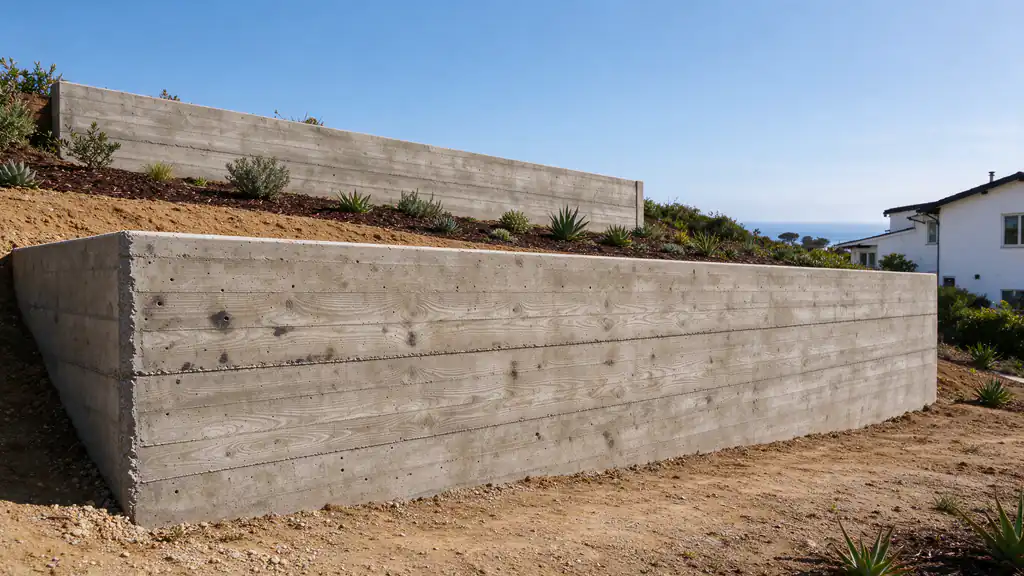
New bluff-top development in Solana Beach sits landward of a Geologic Setback Line of at least 40 feet, so that no bluff retention device is needed.
Under the certified Land Use Plan, bluff retention device permits expire after 20 years and are reassessed, with monitoring reports every five years.
About 99% of the city lies in the Coastal Zone, so even an inland wall can need a Coastal Development Permit or a documented exemption.
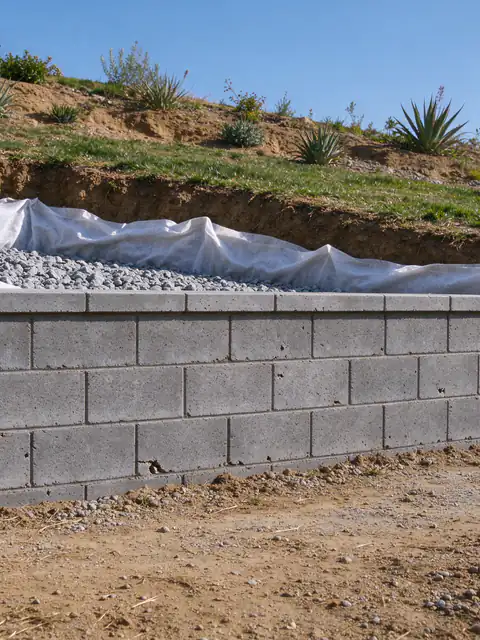
Retaining wall drainage in San Diego: gravel, fabric and perforated pipe behind new walls, plus retrofits for blocked drains.
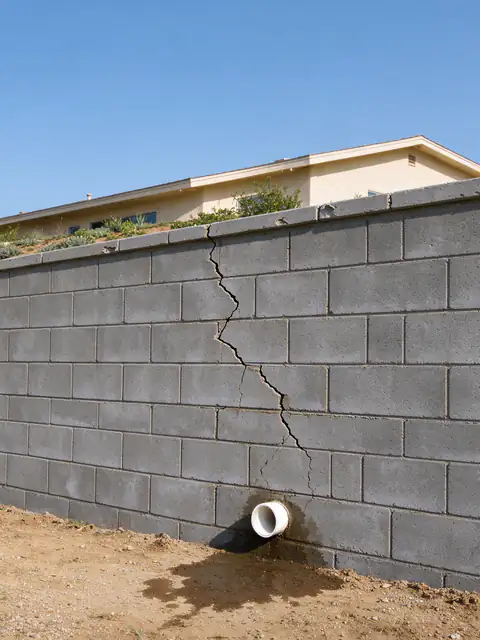
Retaining wall repair in San Diego for leaning, cracked and weeping walls, matched to the cause: drainage, footing or the load above.
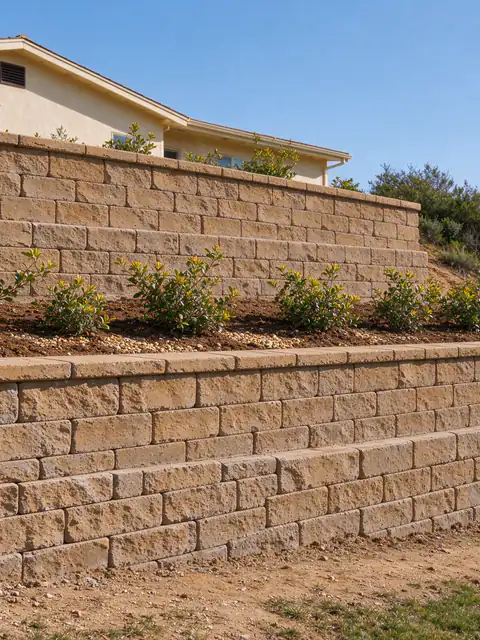
Hillside retaining walls in San Diego: terraced, canyon-rim and below-pool walls, planned around slope stability and soils reports.
Last Updated:
Almost every retaining wall in Solana Beach is a coastal project before it is anything else: about 99% of a grid sample of the city falls inside the California Coastal Zone. Batterline San Diego Retaining Walls offers and manages garden, terrace and hillside retaining walls here, along with drainage fixes and repairs, with building permits through the City of Solana Beach’s Community Development department and coastal permits where they apply.
Solana Beach writes its own bluff rules into its certified Land Use Plan, as modified by the California Coastal Commission. New bluff-top development has to sit landward of a Geologic Setback Line of at least 40 feet, so that no retention device is ever needed to protect it; cantilevers can reach up to 10 feet past that line with every footing landward. Upper-bluff retention systems are approved only on specific findings and last only as long as the structure they protect needs them. Their permits expire after 20 years and are reassessed, mitigation for sand supply and public access is assessed in 20-year increments with a Coastal Development Permit amendment before each period ends, and monitoring reports are due every five years.
The scale of existing armoring shows why. In its 2013 findings, the Coastal Commission counted 53 bluff-top single-family homes in Solana Beach, all north of Fletcher Cove. About 35 had a lower seawall, about 15 of those also had mid or upper bluff armoring, and about 16 had only seacave or notch infill or natural bluff. Upper-bluff retention devices are engineered coastal structures, and shoring, soldier piles and tiebacks are not services Batterline offers. On these lots the walls in scope are the garden and terrace walls landward of the setback, and the coastal bluff walls guide explains how bluff permits differ from ordinary wall permits.
Solana Beach soils are mostly sand, not clay. A USDA soil survey sample puts moderate or higher shrink-swell at just 3% of points, with Marina loamy coarse sand and Corralitos loamy sand among the common units, alongside a severely eroded loamy alluvial land-Huerhuero complex on 9 to 50 percent slopes. A third of points sit on slopes of 15% or more. Sand doesn’t swell against a wall, but it erodes, so the questions are how water leaves the lot and where the wall’s drains discharge. A drain outlet that empties toward a bluff or down an unprotected slope moves the problem rather than solving it. Most homes are older, with 69% built before 1980 (Census ACS), and a wall’s drains are worth checking before its face. On a steeper lot the wall becomes a hillside wall in poured concrete or block, engineered for that slope.
Del Mar is a separate city with its own permit office, the City of Del Mar Planning and Community Development. Its zoning and coastal rules for walls near bluffs, slopes and canyons are its own, and how they apply to a wall is confirmed with the City for each address before design. About 99% of a grid sample of Del Mar lies in the Coastal Zone, 21% of a sample falls on mapped slopes over 25%, and its soils are sandy, mostly Marina loamy coarse sand on 2 to 30 percent slopes. Homes skew older, with 75% built before 1980 (Census ACS). The permit guide explains why each city’s rules are confirmed separately, and the cost guide gives typical San Diego-area wall ranges.
Planning a wall on a Solana Beach or Del Mar lot? Get an Estimate.
Share the wall's length and height, what sits above it and how far the lot is from the bluff edge. The estimate notes the coastal permits the lot is likely to need.
Under the certified Solana Beach Land Use Plan, as modified by the Coastal Commission, permits for bluff retention devices expire after 20 years and are reassessed. Mitigation for sand supply and public access is assessed in 20-year increments, a Coastal Development Permit amendment is needed before each period ends, and monitoring reports are due every five years.
New bluff-top development is set landward of the Geologic Setback Line, at least 40 feet, so that no bluff retention device is needed to protect it. Cantilevered parts may project up to 10 feet seaward of that line or the rear-yard bluff setback, with all footings landward. Current plan text is confirmed per parcel.
It can. About 99% of a grid sample of the city falls inside the Coastal Zone, where wall work can need a Coastal Development Permit or a documented exemption. Which applies is settled with the City of Solana Beach for the address.
The City of Del Mar's Planning and Community Development office, not Solana Beach and not the City of San Diego. Del Mar writes its own zoning and coastal rules, and how they apply to a wall is confirmed with the City for each address before design.
Costs split by wall type. A plain, short poured concrete wall runs around $50 per square foot of face, while an engineered, waterproofed and finished hillside cantilever commonly runs $150 to $260. Wall engineering adds up to about $8,000 for an engineered concrete wall. Solana Beach sets its own permit fees, confirmed per project.
What the City of San Diego, Encinitas and Solana Beach allow near a bluff edge, why bluff work is engineered and permitted case by case, and which parts of it sit outside ordinary residential wall work.
Every trigger the City of San Diego and the County use, from the 3-foot rule and surcharge loads to engineering, soils reports, coastal permits, zoning heights, licensing, fees and inspections.
Typical San Diego-area ranges for each wall type, what sits inside the price, the permit fees the City and County publish, and three worked budgets.
How ownership, recorded agreements, HOA documents and City rules point to who maintains a wall, what the City expects of owners, and where to look before a dispute starts.
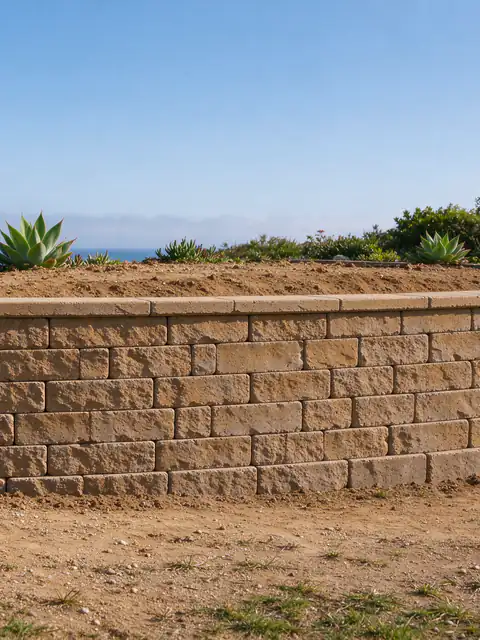
City of Encinitas. Coastal Bluff Overlay setbacks and geotechnical review.
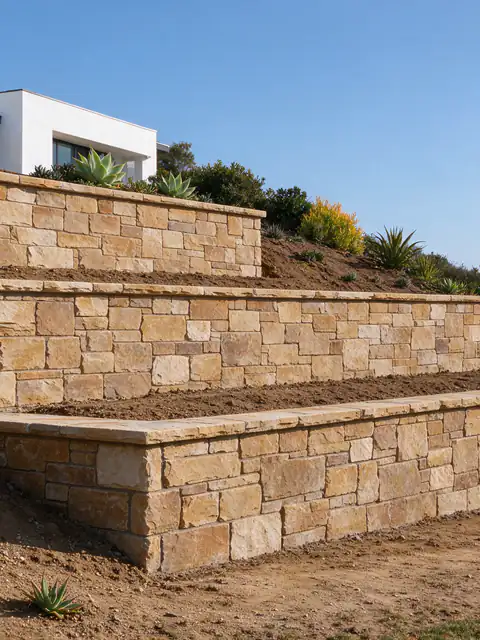
City of San Diego. Coastal bluff setbacks, the La Jolla Shores grading rules and slide-prone formations.
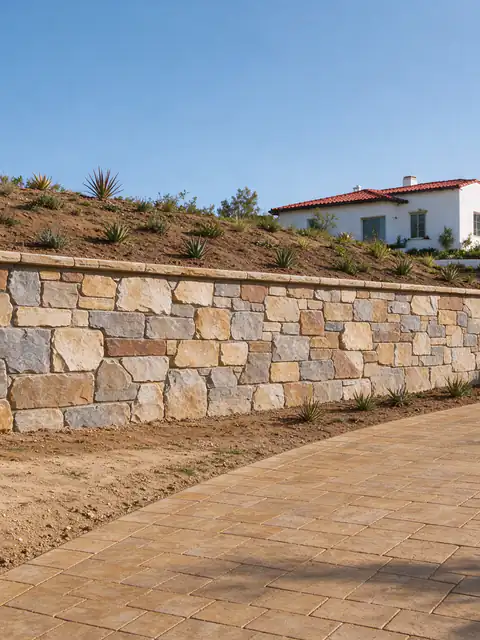
County of San Diego (unincorporated). County permits and heavy clay soils.
Tell us what the wall is doing, how tall it is from the lowest visible point, what sits above it and your ZIP code. Photos of the face, the top and any drain outlets make the first conversation more useful.