A wall on swelling Diablo clay
Moderate or higher shrink-swell shows at 87% of USDA sample points in Chula Vista, so the drain zone behind a wall carries much of its design.
Service area · City of Chula Vista
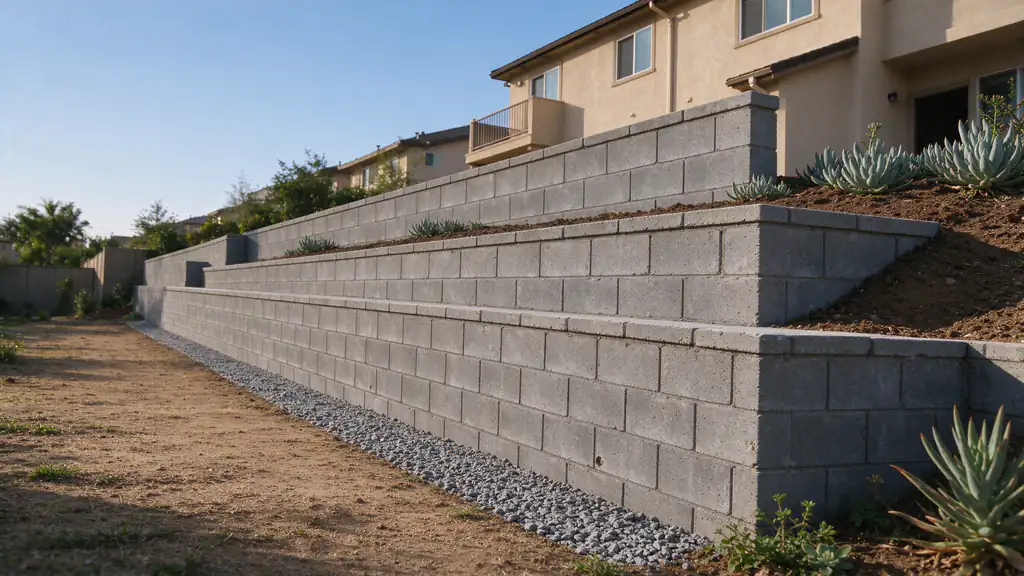
Moderate or higher shrink-swell shows at 87% of USDA sample points in Chula Vista, so the drain zone behind a wall carries much of its design.
Bonita is unincorporated, so a wall over 3 feet or holding a surcharge is permitted by the County, not by Chula Vista.
About 40% of a grid sample of National City lies in the Coastal Zone, where a Coastal Development Permit can apply.
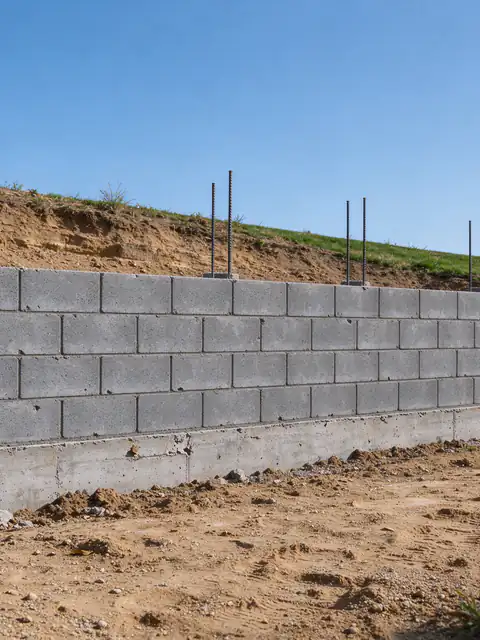
Block retaining walls in San Diego: grouted, reinforced CMU on a concrete footing, built to the City's IB 221 standard design or engineered.
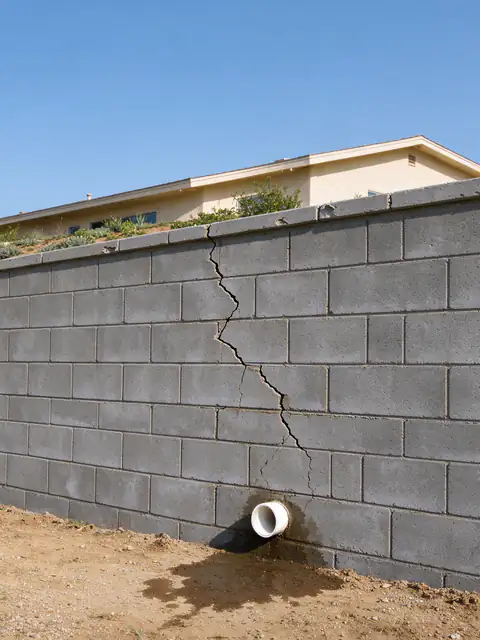
Retaining wall repair in San Diego for leaning, cracked and weeping walls, matched to the cause: drainage, footing or the load above.
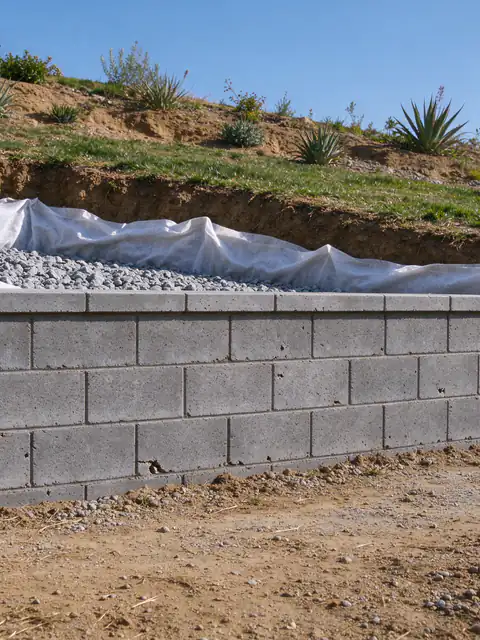
Retaining wall drainage in San Diego: gravel, fabric and perforated pipe behind new walls, plus retrofits for blocked drains.
Last Updated:
Chula Vista sits largely on one soil, Diablo clay, and that clay does more to shape a retaining wall here than the wall’s material does. Batterline San Diego Retaining Walls offers and manages block retaining walls, drainage corrections and repairs in Chula Vista and its neighbors, where permits come from the City of Chula Vista’s Development Services, the City of National City, or the County for Bonita.
In a USDA soil survey sample of the city, the three most common mapped units are all Diablo clay, on 2 to 30 percent slopes, and 87% of points show moderate or higher shrink-swell, 62% high. Clay like that swells when wet and shrinks when dry. Behind a wall, the swelling adds pressure beyond the soil’s own weight, and a wall without a working drain zone takes it every wet season. That is why a Chula Vista wall is usually designed from the back: free-draining gravel, perforated pipe, outlets carried to an approved discharge point, and backfill the engineer specifies rather than whatever clay came out of the trench. The expansive clay guide explains how engineers account for it, and the guide to why walls lean shows how clay pressure, water and an undersized footing can look alike.
The terrain is gentler than the clay suggests: 30% of sample points sit on slopes of 15% or more, about 13% of a separate sample on slopes over 25%, and bedrock within a meter at 35%. Where a lot is cut into one of the steeper hillsides, the slope above becomes part of the load. About 9% of the city lies in the Coastal Zone, where a Coastal Development Permit can apply.
Chula Vista runs its own building department, so the City of San Diego’s rules don’t apply. Retaining wall permits go through Development Services’ Building Division, grading through Development Services Engineering, and the permit threshold is confirmed with the City for each address before design. With 90,273 homes, a median build year around 1987 and a third built in 2000 or later (Census ACS), a wall here can be decades old or quite recent, so a first visit records the wall’s length, exposed and footing-up height, type, condition, drains, irrigation, the load above, access and any permits or plans on file. A freestanding block wall on the property line is a different structure from one holding back soil, and the two are kept apart in the scope.
National City has its own Building Division. Its ground is flatter than Chula Vista’s, with only 8% of USDA sample points on slopes of 15% or more and 4% of a sample on slopes over 25%, but the clay question remains: the Huerhuero-Urban land complex dominates, with moderate or higher shrink-swell at 43% of points. About 40% of a grid sample lies in the Coastal Zone. Homes skew older, with 70% built before 1980 (Census ACS).
Bonita is unincorporated, so County Planning and Development Services issues wall permits. County bulletins exempt only walls under 3 feet from the top of the footing that hold no surcharge. The ground is steeper and still clay: Diablo clay on 15 to 30 percent slopes leads the mapped units, 78% of sample points show moderate or higher shrink-swell, and 25% of a sample falls on slopes over 25%. County PDS building permit records list 19 retaining wall permits with a Bonita mailing address issued between January 1, 2019 and December 5, 2023. The permit guide covers County rules and the cost guide the fees.
A wall on a Chula Vista, National City or Bonita lot? Get an Estimate.
Share the wall's length and height, what sits above it and any lean or cracking. The estimate names the permit office and the design steps the lot is likely to need.
That is set by the City of Chula Vista, through its Development Services Building Division, and the threshold and the point it measures height from are confirmed with the City for each address. A driveway, fence or slope above the wall can change the answer.
Diablo clay swells when it gets wet and shrinks as it dries. Behind a wall, that swelling adds pressure on top of the soil's own weight, and repeated cycles can work a poorly drained wall outward. Where a lot sits on it, the gravel drain zone, outlets and backfill matter as much as the wall itself, and an engineer sets the design.
Some do. About 40% of a grid sample of National City falls inside the Coastal Zone, where a Coastal Development Permit can apply to wall work. Building permits come from the City of National City's Building Division, and whether a lot is in the Coastal Zone is checked for the address.
The County of San Diego's Planning and Development Services, because Bonita is unincorporated. County bulletins require a permit for retaining walls except those under 3 feet from the top of the footing that hold no surcharge, and walls with a foundation, driveway or parking within one wall height of the top need a licensed design.
In Bonita, a County permit runs about $1,020 for an over-the-counter review and about $2,700 with full plan check. Chula Vista sets its own fees through Development Services, confirmed per project. A grouted, finished block wall runs about $120 to $220 per square foot of face either way.
Why shrink-swell clay pushes harder on a wall, where it is mapped across San Diego County, and what an expansive soil retaining wall needs that a wall on sandy ground doesn't.
Every trigger the City of San Diego and the County use, from the 3-foot rule and surcharge loads to engineering, soils reports, coastal permits, zoning heights, licensing, fees and inspections.
The pressures that push a wall over, the three ways walls move, why San Diego's rain pattern and clay matter, and how to record the lean before anyone visits.
Typical San Diego-area ranges for each wall type, what sits inside the price, the permit fees the City and County publish, and three worked budgets.
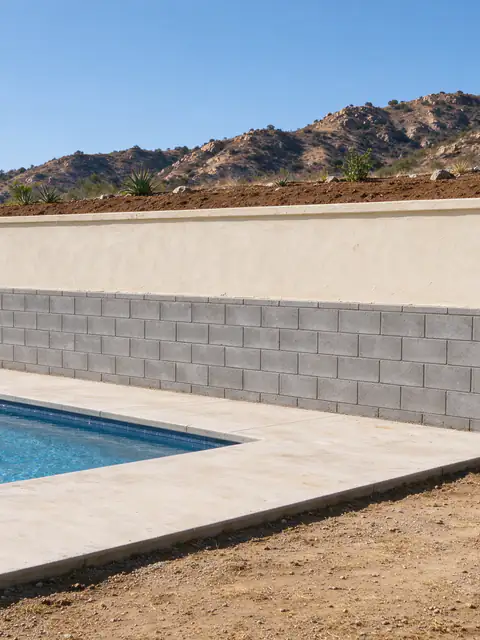
City of El Cajon. Zoning permits for over-height walls and high shrink-swell clay.
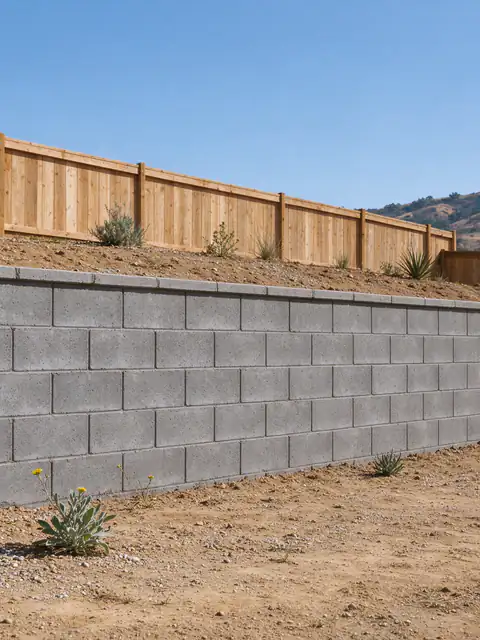
City of Santee. A separate Engineering retaining wall permit near property lines and in hillside areas.
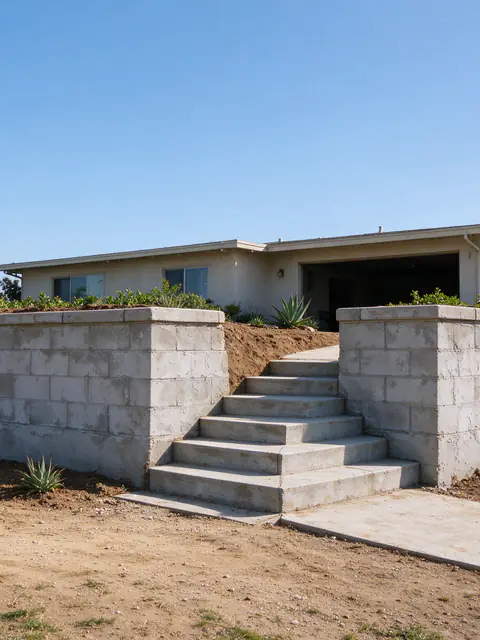
City of San Diego. Sunset Cliffs bluffs; about three quarters of the area in the Coastal Zone.
Tell us what the wall is doing, how tall it is from the lowest visible point, what sits above it and your ZIP code. Photos of the face, the top and any drain outlets make the first conversation more useful.